

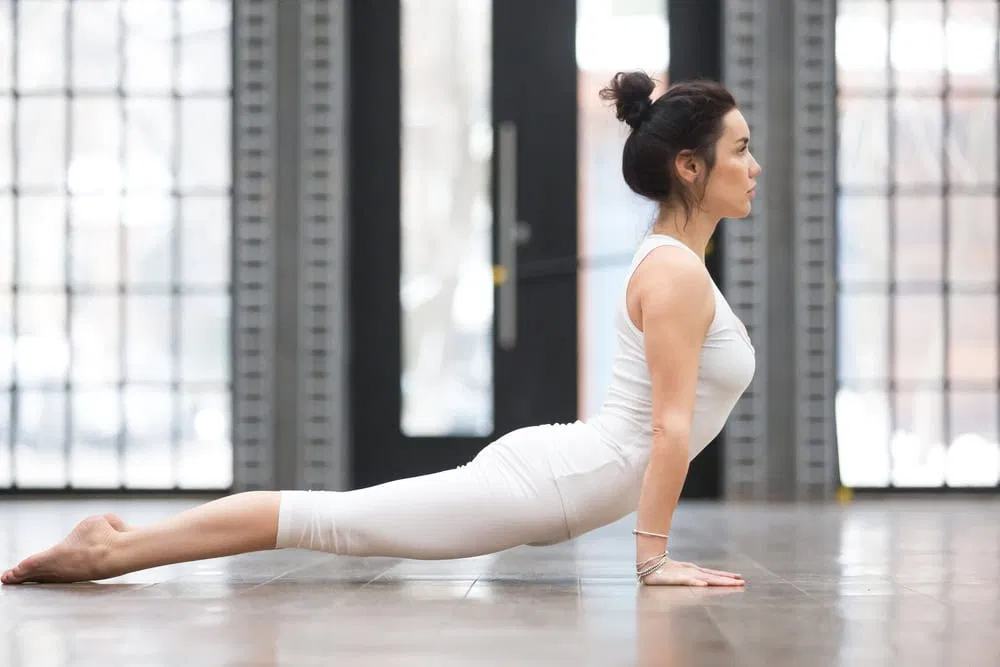
When most people picture a strength-building routine, they immediately think of heavy iron dumbbells, complex cable machines, and crowded weight rooms. For generations, traditional fitness culture has reinforced the idea that building lean muscle mass requires external, mechanical resistance. While weightlifting is an excellent path to physical development, it is far from the only method available. The human body itself is an exceptionally heavy, dynamic tool capable of providing all the resistance necessary to build foundational strength, stability, and enduring muscular stamina.
Yoga is frequently celebrated for its ability to enhance flexibility, promote relaxation, and soothe a stressed mind. However, viewing yoga purely as a passive stretching routine overlooks a profound physiological benefit. When approached intentionally, a structured yoga practice is a powerful form of calisthenics, which refers to bodyweight resistance training. By holding specific postures, transitioning smoothly between shapes, and manipulating your center of gravity, you force your muscles to contract statically and dynamically. For a beginner, yoga provides a safe, accessible, and deeply effective environment to cultivate total-body strength without ever stepping foot inside a traditional gym or picking up a single weight.
The Biomechanics of Bodyweight Strength in Yoga
To understand how a beginner can build muscle using yoga, it helps to examine the underlying exercise science. Strength training operates on the principle of placing a mechanical load on muscle fibers, causing micro-tears that recover to be thicker and more resilient. Yoga achieves this load through two primary mechanisms: isometric contractions and eccentric control.
An isometric contraction occurs when a muscle generates force without changing its length or moving the joint. Holding a stable yoga pose for thirty to sixty seconds requires sustained, intense isometric engagement. Your muscles must continuously fire to hold your body weight against the relentless pull of gravity. Eccentric control, on the other hand, involves lengthening a muscle under a load, such as slowly lowering your body down to the floor. This deliberate deceleration stimulates deep motor unit recruitment, building functional strength that translates directly into everyday activities.
Core Poses for Developing Lower Body Power
The lower body contains the largest muscle groups in the human physique, including the gluteals, quadriceps, and hamstrings. Developing strength in these areas supports joint health, increases metabolic rate, and improves overall structural balance. Yoga utilizes wide stances and deep bends to challenge these massive muscle groups simultaneously.
-
Warrior II: This foundational posture is an exceptional developer of lower-body endurance. Standing in a wide, lateral stance and bending your front knee to a ninety-degree angle forces your quadriceps and glutes to work as a unit to hold the position. Simultaneously, the trailing leg must remain entirely engaged to anchor your weight, strengthening the hip abductors and stabilizers.
-
Chair Pose: Often described as a functional bodyweight squat held statically, this posture places immense tension on the thighs and glutes. By sinking your hips back and down while keeping your chest elevated, you force your lower body to support your torso weight, building deep muscular endurance in the lower limbs.
-
Crescent Lunge: This high-lunge variation targets balance and strength in unison. By elevating the back heel and sinking into the front knee, you place an intense load on the front leg while stretching and strengthening the hip flexors of the back leg. The continuous micro-adjustments required to stay upright build structural stability around the knees and ankles.
Rebuilding Upper Body Resilience and Upper Core Stability
Many beginners struggle with upper body strength, particularly in the shoulders, chest, and triceps, because modern daily life rarely demands pushing or pulling our own body weight. Traditional gym exercises often isolate these muscles, but yoga integrates them into complete kinetic chains, forcing the upper body to coordinate with the core.
-
Plank Pose: This universal exercise is the ultimate foundation for upper body and core development. Holding a straight line from your head to your heels requires your pectorals, anterior deltoids, and triceps to push the floor away continuously. Simultaneously, the rectus abdominis and transverse abdominis must lock into place to prevent the pelvis from sagging, building complete anterior core strength.
-
Four-Limbed Staff Pose: Known classically as a low plank or the lowering phase of a yoga push-up, this is one of the most challenging bodyweight movements in fitness. It requires your triceps, chest, and shoulders to control your body as you hold a hover just inches above the yoga mat. For beginners, practicing this with the knees resting on the floor allows for the systematic development of the necessary upper body power without overloading the joints.
-
Downward-Facing Dog: While often viewed as a resting posture by experienced practitioners, for a beginner, this inverted shape is a serious upper body workout. It places a significant portion of your weight onto your hands and shoulders, requiring the trapezius, serratus anterior, and deltoids to stabilize your shoulder blades while pushing your hips back toward the ceiling.
Mastering Balance and Internal Stabilization
True strength is more than just raw power; it encompasses balance, agility, and the capability to stabilize your joints in unstable positions. Yoga excels at this by stripping away external supports and forcing you to balance your entire weight on a single leg or a limited base of support.
When you stand on one leg, your brain must rapidly communicate with hundreds of tiny stabilizing muscles throughout your foot, ankle, knee, and hip to maintain equilibrium. This enhances proprioception, which is your body’s internal awareness of its position in physical space. Cultivating this internal stabilization protects your larger joints from chronic wear and tear, corrects natural lateral imbalances between the left and right sides of your body, and creates an athletic, deeply coordinated physical foundation.
Designing a Sustainable Beginner Strength Sequence
To successfully build strength through bodyweight yoga, consistency and structure are far more important than intensity or complex gymnastics. A beginner should focus on executing a simple, well-structured sequence three to four times per week, allowing forty-eight hours of rest between sessions for optimal muscular recovery.
A typical strength session should begin with five to ten minutes of gentle movement to increase blood circulation, lubricate the joints with synovial fluid, and warm up the muscle tissue. Once warmed up, transition into holding the core strength postures, aiming to hold each shape for five deep, controlled breaths, eventually progressing to ten breaths as your capacity increases. Focus entirely on the quality of your alignment and the precision of your breath rather than trying to force your body into extreme, uncomfortable depths. Conclude every practice with several minutes of passive resting shapes to calm the central nervous system and initiate the biological recovery process.
Frequently Asked Questions
Can yoga really trigger muscle hypertrophy or noticeable muscle growth like lifting weights does?
Yoga can absolutely trigger muscle hypertrophy, particularly in beginners or individuals who are transitioning from a sedentary lifestyle. When you support your body weight in challenging angles, your muscles experience significant mechanical tension and metabolic stress, which are the primary drivers of muscle growth. However, because bodyweight resistance has an upper limit, yoga will eventually transition from building bulk muscle to enhancing dense muscular endurance and functional tone.
How do I modify upper body poses if my wrists hurt during a yoga workout?
Wrist discomfort is very common for beginners because the joint is unaccustomed to bearing body weight. To alleviate this, ensure you are actively distributing your weight across your entire hand, pressing firmly into your knuckles and fingertips rather than dumping all your weight directly into the heel of the palm. Alternatively, you can drop your forearms to the mat to perform dolphin poses or forearm planks, completely bypassing the wrist joint while maintaining upper body tension.
Why do my muscles shake uncontrollably when I hold certain basic yoga poses?
Muscular shaking is a completely normal, safe physiological response known as a benign tremor. It occurs because your nervous system is recruiting unfamiliar motor units to manage the continuous isometric load. As your muscles tire, the individual muscle fibers rapidly cycle between contracting and relaxing to hold you in place, resulting in a shaking sensation. With consistent practice, your neuromuscular efficiency improves, and the shaking will diminish.
Is it safe to practice a strength-focused yoga routine if I am stiff or inflexible?
Yes, it is entirely safe and highly recommended. Flexibility is not a prerequisite to starting yoga; it is a long-term consequence of practicing yoga. Many strength-focused postures do not require extreme ranges of motion to be effective. Furthermore, practicing poses with slightly bent knees or utilizing blocks to bring the floor closer to your hands allows you to safely build strength while your flexibility naturally improves over time.
How does breath control influence physical strength during a difficult yoga pose?
In yoga, matching your movement with controlled abdominal breathing is vital for generating physical power. Deep, deliberate inhalations expand the thoracic cavity and steady the mind, while slow, forced exhalations engage the deep transverse abdominis core muscles. This internal core engagement increases intra-abdominal pressure, which structurally stabilizes your spine and allows you to hold demanding positions with significantly more control and less physical strain.
Can a beginner use a regular household rug instead of a dedicated sticky yoga mat?
For a strength-focused practice, using a dedicated sticky yoga mat is highly recommended over a household rug or bare floor. Yoga mats are engineered to provide localized traction, preventing your hands and feet from slipping apart during wide-standing poses like lunges or downward dog. Slipping forces your muscles to fight for basic traction rather than focusing on alignment and strength, which drastically increases the risk of joint strains.
How long should a beginner hold a strength posture before resting?
A beginner should initially aim to hold a strength-building posture for three to five deep, slow breaths, which equates to roughly twenty to thirty seconds of sustained tension. It is far better to hold a pose perfectly with full mental focus for twenty seconds than it is to hold it for a minute with collapsing form and a sagging spine. As your muscular endurance naturally develops, you can gradually extend your holds to ten breaths or one full minute.

Comments are closed.